
Fender Panel
Model Fendersys-FR
Heavy-duty fixed fender systems, such as cone fenders and super cell fenders, are usually designed with a fender panel. The panel spreads the berthing force over its flat face, reducing concentrated loads on the hull, and its size can be adjusted so that the average hull pressure stays within the allowable limit.
Features
- Distributes berthing loads to keep hull pressure within allowable limits
- Open or closed (box-type) construction
- Top, bottom or side edges can be chamfered or angled to prevent hull belting from snagging
Applications
- Super cell fender systems
- Cone fender systems
Panel Design
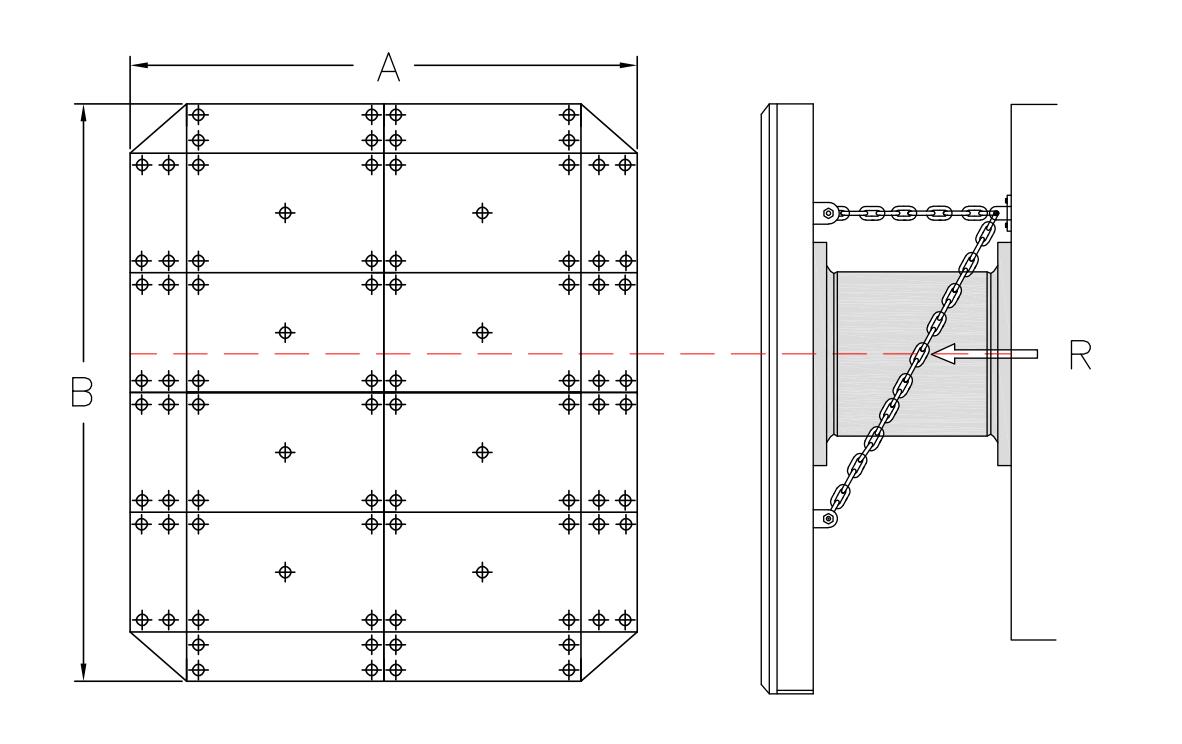
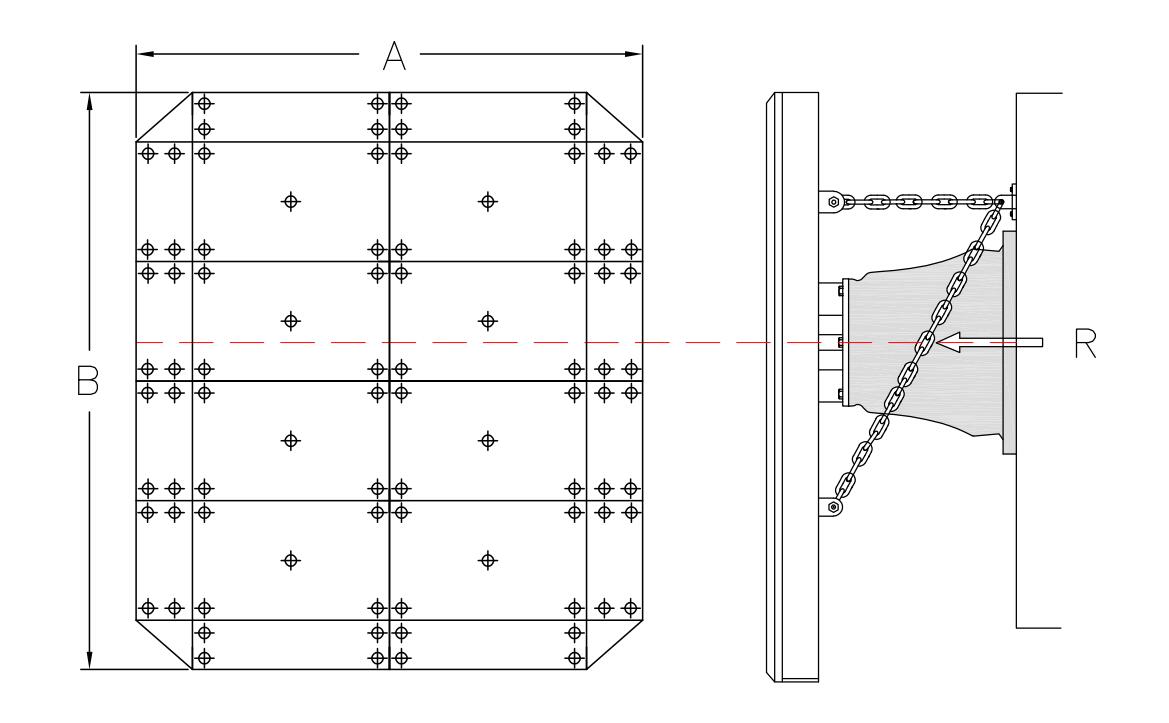
There are two types of fender panel construction: open and closed. Closed panels are sometimes called box-type panels. In general, open panels make the internal structure easier to inspect, while closed panels offer better corrosion resistance.
Depending on the vessel type and hull structure, the top, bottom or sides of the panel can be chamfered or angled to prevent hull belting from catching or hooking on the panel.
Protective Coating
In a corrosive marine environment, a protective coating prevents the fender panel from corroding and so preserves its performance. ISO 12944 recommends an epoxy protective coating system to achieve the high durability expected in the seawater splash zone.
| Standard coating system specification | |
|---|---|
| Surface preparation | SSPC.SP10/SIS SA2.5 |
| Primer | Organic zinc-rich primer, 20~50 μm |
| Intermediate coat / topcoat | High-solids epoxy, minimum 2 coats |
| Total dry film thickness | Minimum 450 μm |
| Colour | Black |
Cathodic Protection
Sacrificial anodes (zinc or aluminium) can be fitted to the fender panel for additional corrosion protection. The number and weight of the anodes depend on the required protection period.